-

Arabic
-
English
-
French
-
Malagasy
-
Portuguese
-
Russian
-
Spanish
-
Thai




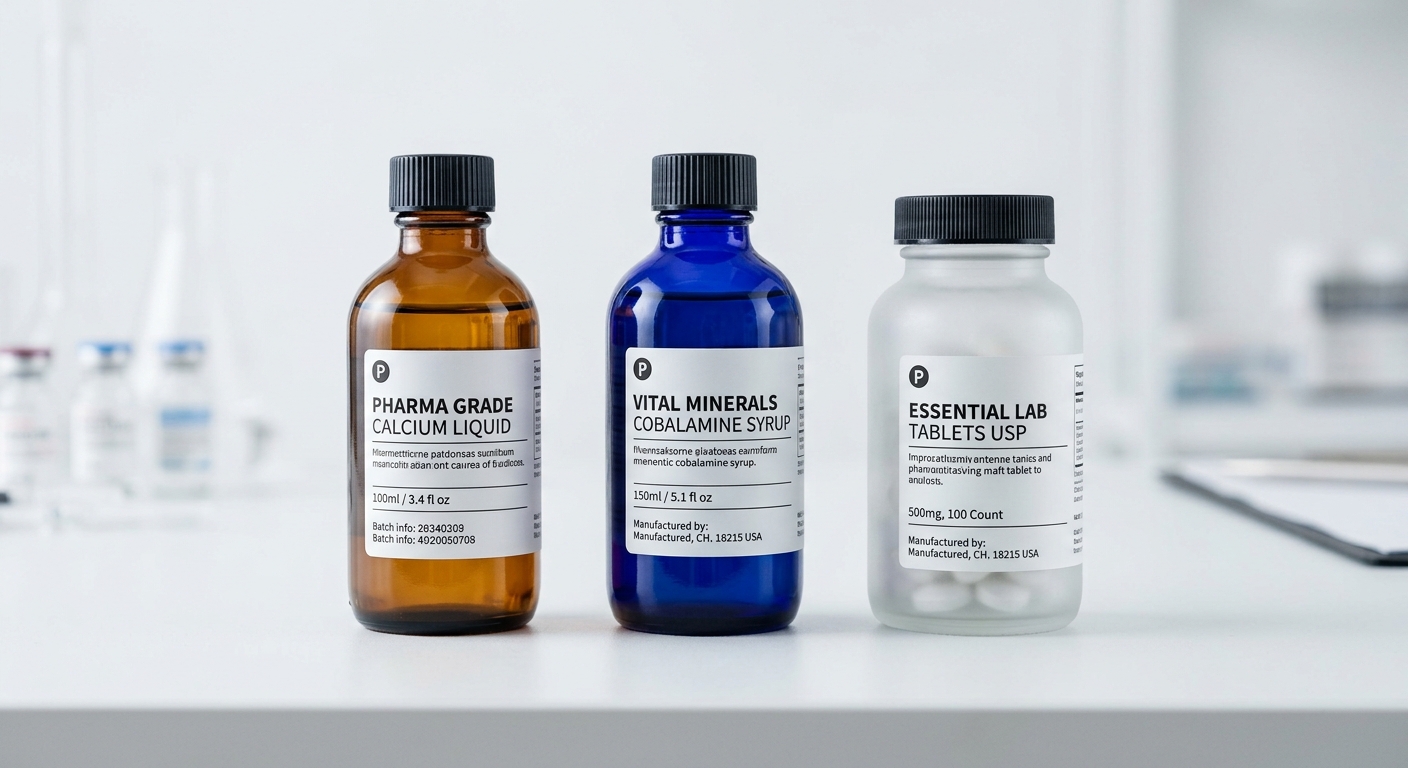
If you're choosing a glass color for pharmaceutical packaging in 2026, the short answer is this: amber for the broadest light protection, cobalt for select photosensitive formulas with brand-driven appeal, and frosted when opacity, premium feel, or skin-care positioning matters more than UV blocking. Amber remains the workhorse because it blocks wavelengths between roughly 290 and 450 nanometers — the range most likely to degrade active ingredients. Cobalt and frosted have legitimate uses, but they solve different problems. Below is how to decide which one belongs on your product.
Why Glass Color Is a Formulation Decision, Not a Design One
Here's a mistake we see constantly: brand teams pick a bottle color in a moodboard meeting, then ask the chemist to sign off. That's backwards. Light degradation is measured in lux-hours and wavelength sensitivity — not vibes.
Many APIs (vitamin B12, riboflavin, nitroglycerin, certain antibiotics, essential oils like bergamot and lavender) photo-degrade in the UV-A and visible blue range. If your product sits on a pharmacy shelf under fluorescent or LED lighting for 18 months, even visible-light photolysis matters. Amber glass attenuates more than 90% of light below 450 nm. Cobalt cuts off around 350 nm but lets visible blue–green through. Clear frosted glass mostly scatters light — it doesn't absorb it.
So the order of operations is: stability test the formula first, then choose the color that matches your degradation curve, then layer aesthetics on top. Our guide on choosing the right bottle walks through this sequencing in more detail.
Amber Glass: The Default for a Reason
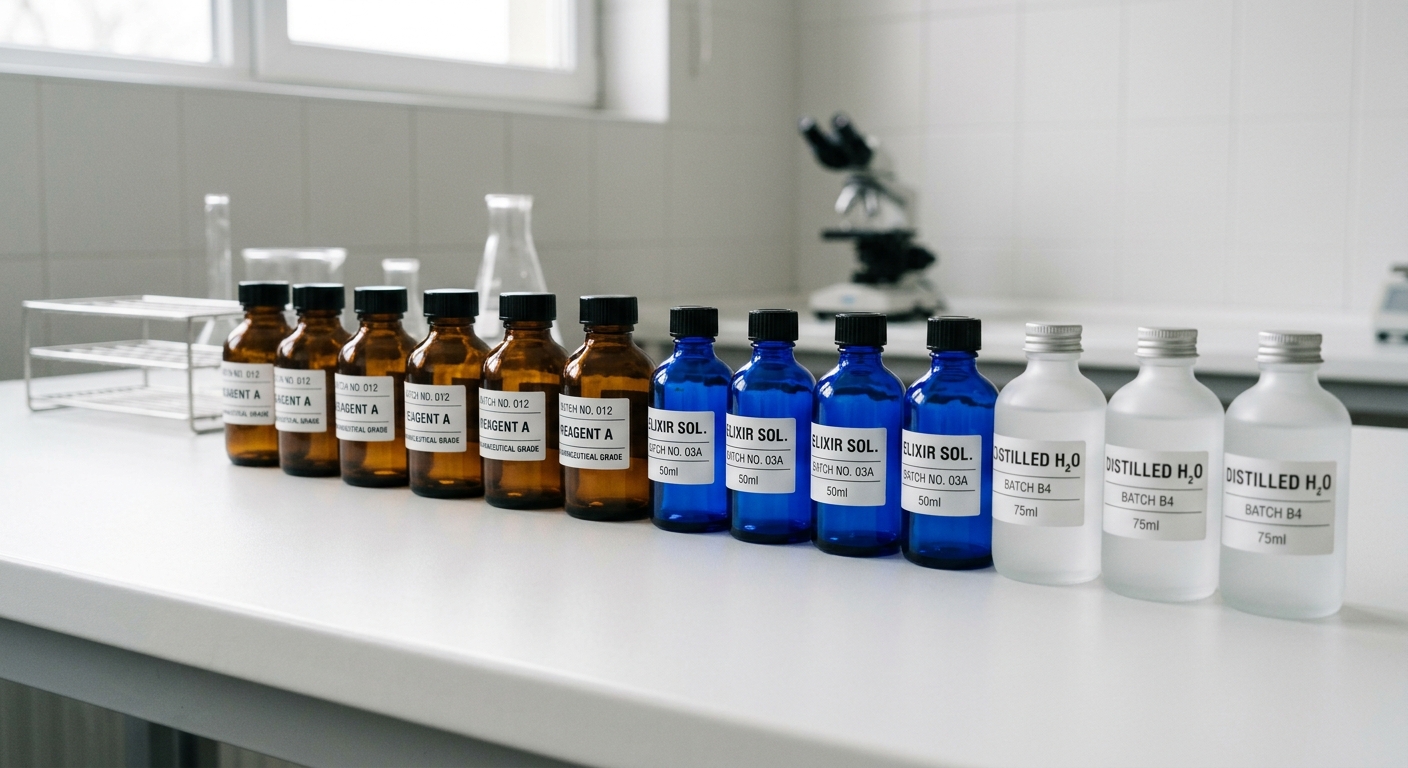
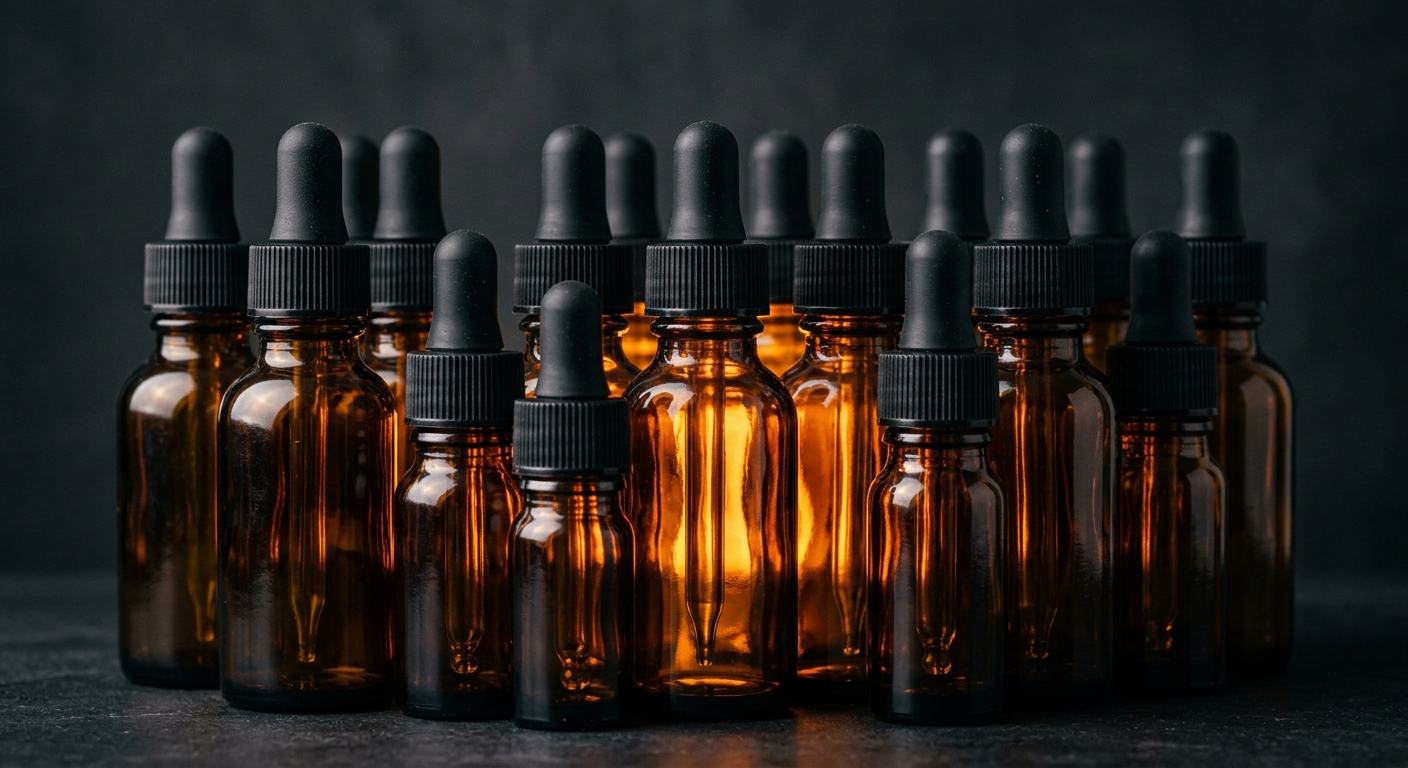
Amber wins on physics. The iron, sulfur, and carbon compounds added during melting create that classic brown tone — and they happen to absorb the exact UV and short-visible wavelengths that destroy most light-sensitive drugs.
When to specify amber
- Oral liquids and syrups containing vitamins, antibiotics, or photoreactive flavorings
- Tinctures, herbal extracts, and CBD oils where terpene preservation matters
- Essential oils sold for aromatherapy or compounding
- Eye drops and ophthalmic solutions (often Type I amber)
The cost angle
Amber is the cheapest colored pharma glass on the market because demand is huge and most factories run continuous amber furnaces. Switching from amber to cobalt typically adds 25–40% to per-unit cost at comparable volumes. For a contract manufacturer ordering 500,000 dropper bottles, that gap is meaningful.
One real example: a US-based herbal supplement brand we work with moved from clear bottles with UV-coating sleeves to amber Boston rounds and cut their packaging cost by 18% while improving 24-month stability test results. The Boston round in amber is still the most-ordered pharma shape in our catalog for that reason.
Cobalt Blue: Specialty Color With Specific Use Cases
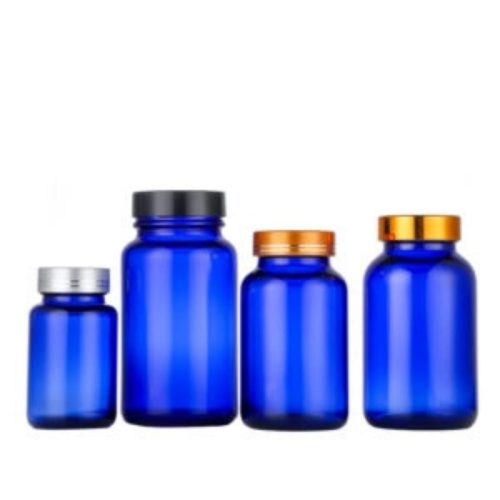
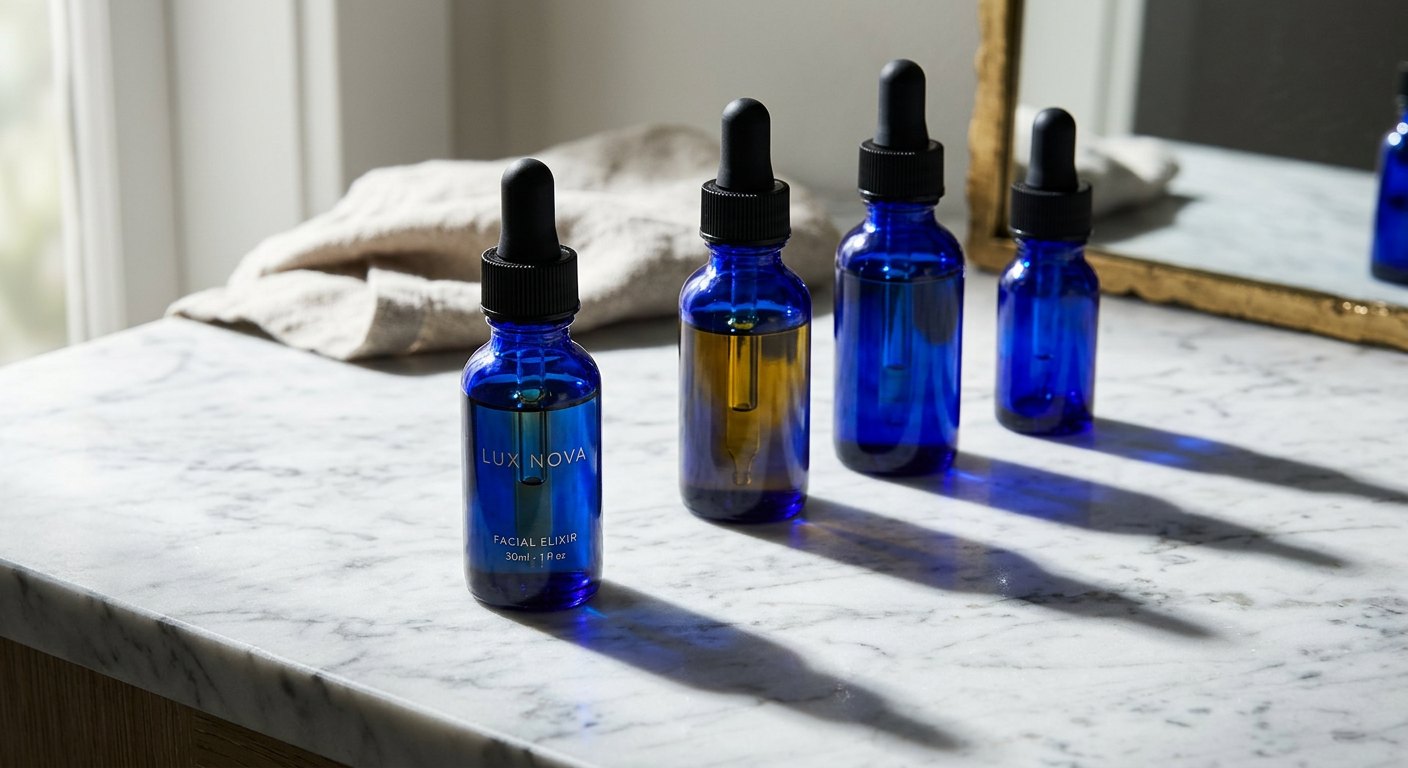
Cobalt looks gorgeous on shelf. That's why beauty-adjacent pharma — homeopathic remedies, premium magnesium oil, certain hydrogen peroxide solutions — leans into it. But don't confuse aesthetic appeal with broad-spectrum protection.
Cobalt glass uses cobalt oxide as the colorant. It absorbs UV up to roughly 350 nm and some red wavelengths, but transmits a fair amount of visible blue-green light. For products sensitive only to short UV (like 3% hydrogen peroxide), that's fine. For products sensitive to the full visible-blue range, cobalt under-performs amber.
Where cobalt makes sense in 2026
- OTC products where shelf differentiation is a real sales driver
- Homeopathic and naturopathic lines targeting premium positioning
- Cosmeceuticals straddling the pharma/beauty line — think prescription-grade serums sold direct to consumer
- Heritage brands where blue is part of the visual identity
A small homeopathic brand we supplied last year switched from clear to 30 ml cobalt dropper bottles for their flagship arnica line. Sell-through in independent pharmacies jumped because the bottle was visually distinct in a sea of amber and white. The formula didn't need cobalt's UV profile specifically — but the marketing payoff justified the cost.
Frosted Glass: Opacity, Luxury, and Dermo-Pharma Crossover
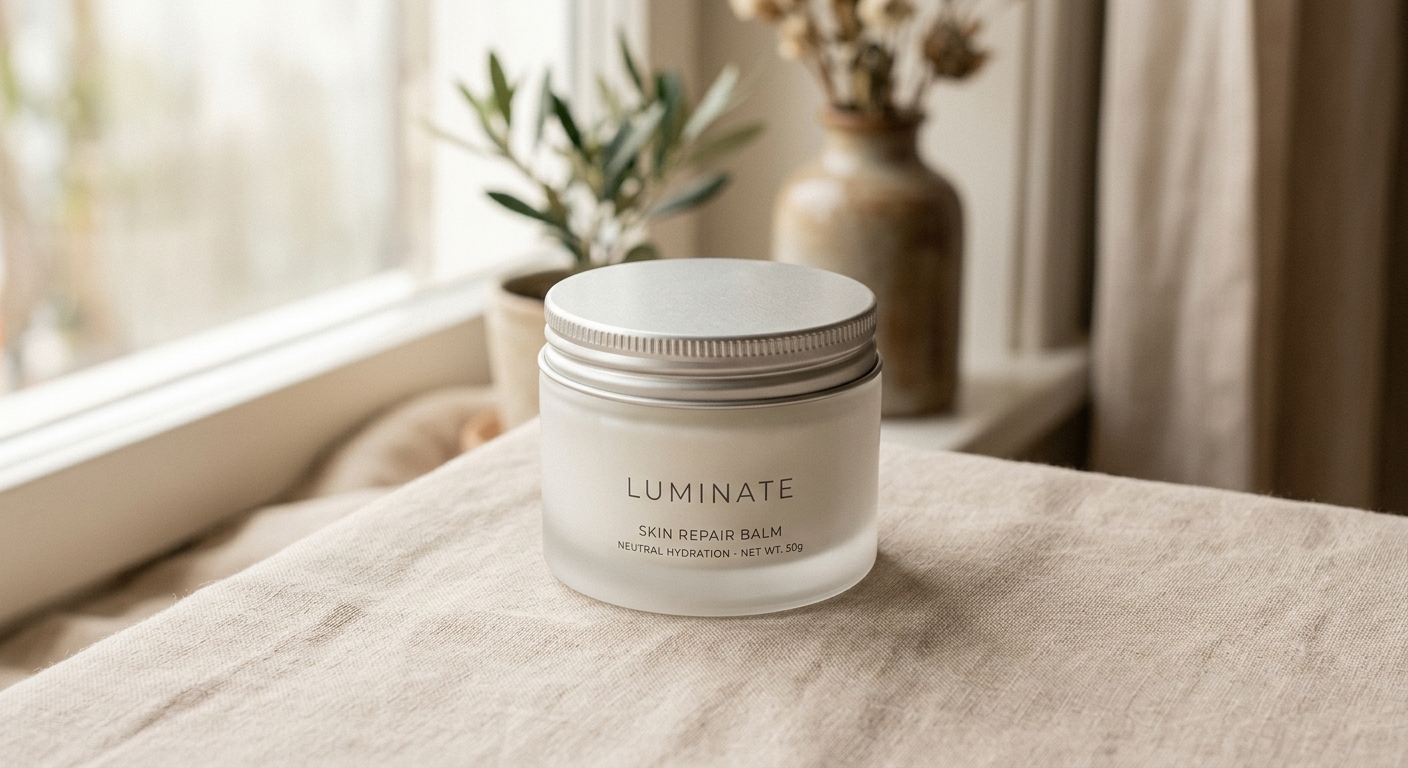
Frosted is not really a color — it's a surface treatment applied to clear, amber, or cobalt glass through acid etching or sandblasting. It diffuses light rather than absorbing it.
For pharma, frosted finishes show up most often in:
- Topical creams, ointments, and prescription dermatology jars
- Premium nutraceutical droppers where the brand wants a soft, spa-like feel
- Compounding pharmacy private labels targeting upscale clinics
- Products that need to hide sediment or color variation in suspension formulas
If your base glass is clear, frosting alone does very little for UV protection — light still passes through, just scattered. To get both opacity and UV blocking, start with amber or apply a UV-protective coating before frosting. This matters more than people realize: a dermatology brand once asked us to frost clear bottles for a retinol serum, then discovered the formula degraded faster than in their old amber stock. We switched to frosted amber and the problem disappeared.
If you want to explore aesthetic finishes more broadly, our bottle customization guide covers frosting, coating, and decoration options in depth.
Regulatory and Compliance Considerations You Cannot Skip
Color affects appearance — but the underlying glass type drives regulatory acceptance. In 2026 the standards haven't shifted dramatically, but enforcement has tightened in several export markets.
The glass types that matter
- Type I (borosilicate): highest chemical resistance, required for injectables, sensitive parenterals, and many EU markets
- Type II (treated soda-lime): sulfate-treated interior surface, suitable for acidic and neutral aqueous formulations
- Type III (soda-lime): standard for non-aqueous and dry products, most oral solids and topicals
Amber, cobalt, and frosted finishes can all be produced in Type I, II, or III glass — but not every supplier offers every combination. Confirm upfront. For EU and Japanese markets, also verify EP and JP compliance. For US, USP for glass and for delamination risk.
One often-missed detail: cobalt colorants can introduce trace metal migration concerns under aggressive testing protocols. If you're shipping to markets with strict heavy-metal limits (Germany, Japan, parts of the Middle East), request a migration test certificate alongside your COA.
Matching Color to Product Category — Real Examples
Theory is fine. Here's how this plays out in practice across the most common pharma categories we supply.
Oral liquids and syrups
Amber, every time. The combination of light sensitivity and long shelf life (typically 24–36 months) makes anything else risky. A pediatric cough syrup manufacturer in Southeast Asia recently consolidated 12 SKUs into a single amber bottle family across 60 ml, 100 ml, and 200 ml — cutting tooling costs and simplifying labeling QC.
Topical creams and ointments
Frosted amber jars for prescription dermatology. Frosted clear or white-coated for OTC and cosmeceutical. The choice usually comes down to whether the active ingredient (retinol, hydroquinone, certain antibiotics) is photolabile.
Essential oils for pharmacy retail
Amber dominates, but cobalt has carved out a 15–20% market share in premium lines. If you're a private-label brand entering this category, amber is the safer bet for stability claims.
Hydrogen peroxide and antiseptics
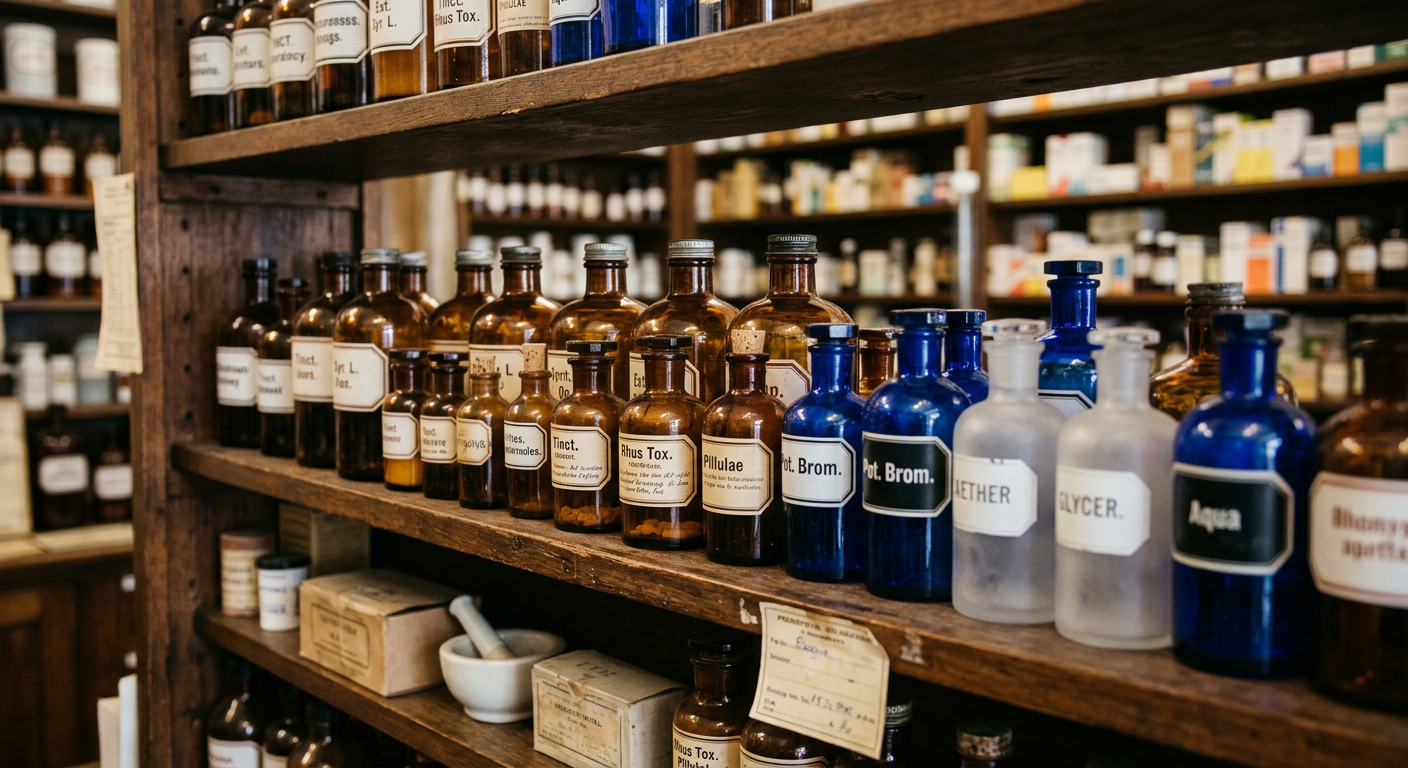
Traditionally cobalt or amber. Both work. Cobalt has heritage value — pharmacists and older consumers still associate the deep blue bottle with quality antiseptics.
Veterinary pharmaceuticals
Mostly amber, with a growing trend toward frosted amber for premium pet supplement brands targeting the boutique vet channel.
Customization Without Compromising Function
You can have both — protective glass and a distinctive look — if you plan the sequence correctly.
Start with the functional requirement (amber Type III, for example). Then layer decoration: screen printing, hot stamping, embossing, or partial frosting. Avoid full opaque coatings over amber unless you're certain the coating itself doesn't trap heat or react with the contents under tropical shipping conditions.
For brands building a private mold, this is where the conversation about exclusivity gets real. A unique bottle shape in amber Type I borosilicate, paired with a custom closure and embossed logo, gives you genuine packaging IP. We documented one such project in our European spirits brand case study — and the same principles apply to pharma. The mold cost is amortized fast at volumes above 200,000 units annually.
Decoration options that work well on amber and cobalt:
- White or metallic screen printing (high contrast against dark glass)
- Recessed embossing for tamper-evidence cues
- Spot frosting for a label-free aesthetic on dropper bottles
- Color-matched closures in PP or aluminum
Cost, Lead Time, and Order Volume Reality Check
Color choice cascades into your supply chain in ways that aren't always obvious at quote time.
Amber
Lead time 25–35 days for stock molds, MOQs typically start at 10,000 units. Continuous production means you can reorder reliably. Cost per unit is the benchmark — everything else is compared against amber.
Cobalt
Lead time 35–50 days because cobalt is run in scheduled campaigns rather than continuously. MOQs often higher (20,000–30,000 units) to justify a furnace color changeover. Price premium 25–40% over amber.
Frosted
Add 3–7 days to whatever the base glass lead time is, plus 8–15% cost for the frosting process. Acid-etched frosting is more uniform than sandblasted; specify which you want.
If you're sourcing for a launch with tight timing, amber buys you flexibility. If you're planning 12 months out, cobalt or frosted are fully workable. For broader bottle selection logic, the types of glass bottles overview is a useful companion read.
Pulling It Together: A Decision Framework
If you remember nothing else, use this sequence:
- Confirm photosensitivity of your active ingredients via stability data — not assumption.
- Pick the glass type (I, II, or III) based on chemical compatibility and target market regulations.
- Default to amber unless you have a specific reason not to.
- Consider cobalt if shelf differentiation and brand heritage justify the cost and lead time premium, and your formula doesn't need visible-blue protection.
- Add frosting when opacity or premium feel matters — on top of amber if light protection is also required.
- Validate with accelerated photostability testing (ICH Q1B) before locking the spec.
Packafill manufactures amber, cobalt, frosted, and custom-tinted pharmaceutical glass across Type I, II, and III at volumes from small private-label runs to multi-million-unit programs. If you're working through a packaging spec and want a second opinion on color, glass type, or decoration before tooling commits, get in touch through our main site or browse the blog for more buyer guides. We'd rather help you pick the right bottle once than fix the wrong one later.