-

Arabic
-
English
-
French
-
Malagasy
-
Portuguese
-
Russian
-
Spanish
-
Thai




An empty bottle of wine is most often just called a "wine bottle" or, in winemaking and packaging circles, an "empty" or "stock bottle" — but the exact name changes depending on its shape, size, and regional style. Knowing the right term matters whether you are collecting bottles, home bottling a batch of wine, or sourcing empty bottles of wine wholesale for a winery or beverage brand. This guide covers the common names, standard sizes, and where to buy empty wine bottles in bulk.
Table of contents
1. What Is an Empty Bottle of Wine Called?
2. What Is a 750ml Wine Bottle Called?
3. Wine Bottle Shapes and Their Names
4. Wine Bottle Sizes, From Split to Magnum
5. Where to Buy Empty Bottles of Wine Wholesale
6. FAQ
What Is an Empty Bottle of Wine Called?
The generic term for any empty bottle of wine is simply a "wine bottle" or "stock bottle" in the packaging trade. There is no single special word that only applies once a bottle is empty — the same name (Bordeaux, Burgundy, Champagne, and so on) is used whether the bottle is full or empty. What does change is how people refer to empty bottles depending on context: home winemakers and homebrewers often call a cleaned, reusable bottle a "stock bottle" or "reuse bottle," while packaging suppliers and distributors refer to unfilled, factory-new bottles as "empty wine bottles" or "empty glass wine bottles wholesale."
What Is a 750ml Wine Bottle Called?
A 750ml bottle is called a standard bottle — the most common wine bottle size worldwide, used for both red and white wines. In the United States, 750ml is the standard size for still wines; sparkling wines in the US are typically sold in 750ml bottles as well, though smaller 375ml half-bottles are common for splits and gifting. In the EU, 750ml is likewise the standard reference size across most wine categories. A standard 750ml bottle yields about five 150ml glasses of wine.
Wine Bottle Shapes and Their Names
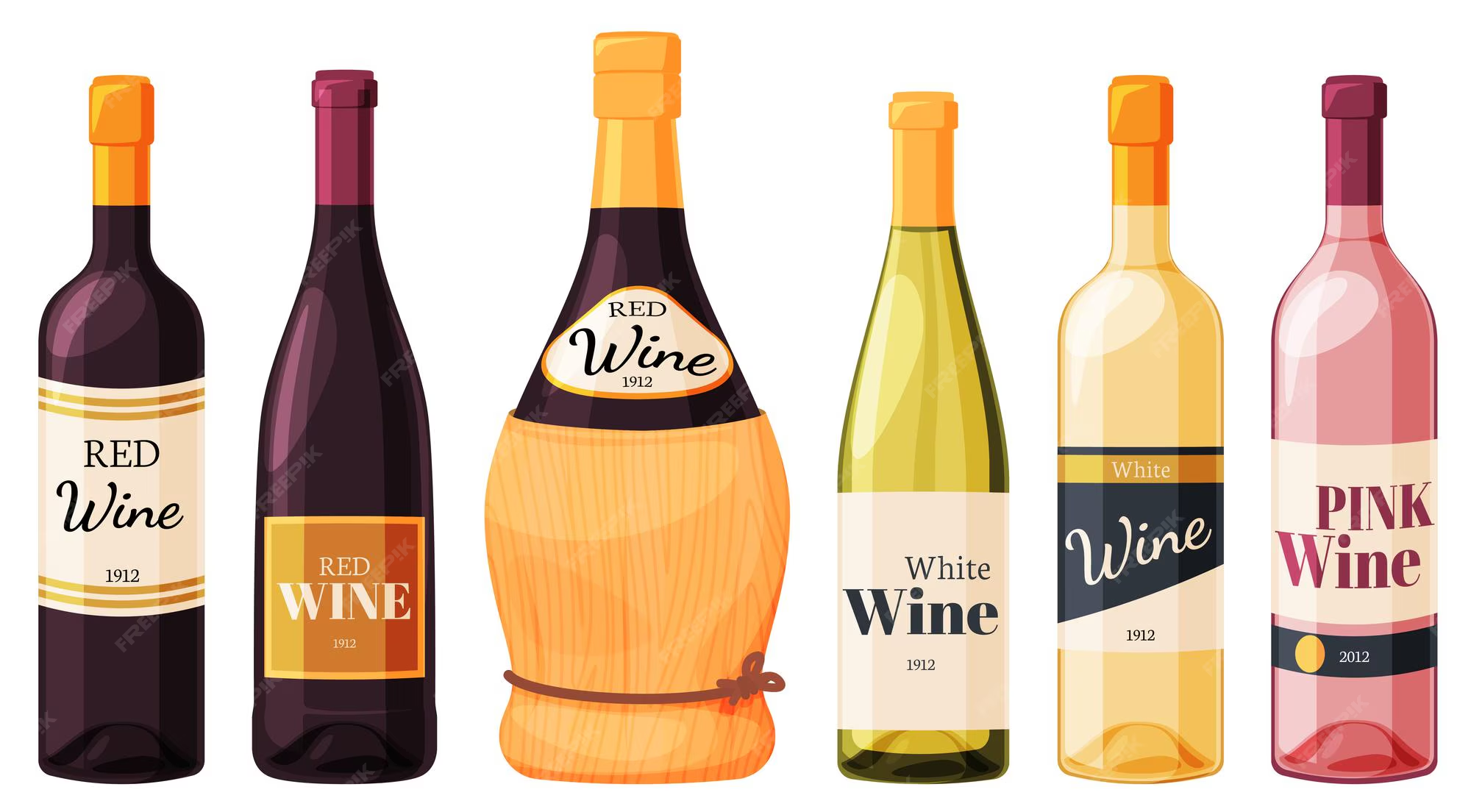
Beyond size, wine bottles are named by their shape, which is traditionally tied to a wine region and style:
Bordeaux Bottle
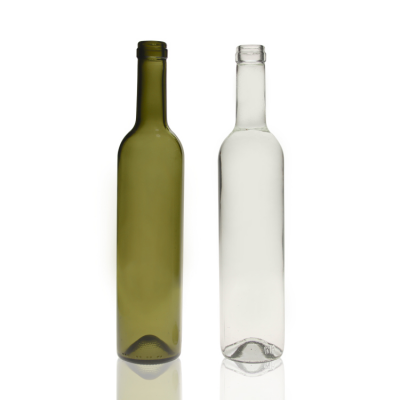
The Bordeaux bottle is the shape most often used for red wines. It has straight sides, high shoulders, and a narrower profile than a Burgundy bottle. Standard capacity is 750ml (with 375ml, 1.5L magnum, and larger formats also common). Originally used for wines from Bordeaux, France, this shape is now widely used worldwide, including for many California red wines.
Burgundy Bottle
The Burgundy bottle has gently sloped shoulders and a slightly wider body than the Bordeaux bottle, traditionally used for both red and white Burgundy wines (Pinot Noir and Chardonnay). Standard capacity is also 750ml.
Champagne Bottle
The Champagne bottle is thicker and heavier than still-wine bottles, built to withstand the internal pressure of sparkling wine (up to roughly 6 atmospheres). It has a pronounced punt (indentation in the base) and a wider neck to hold a cork and wire cage (muselet). Standard capacity is 750ml, with a 375ml "half" and larger formats such as magnum (1.5L) used for celebrations and premium releases.
Rhine (Hock) Bottle
The Rhine or "hock" bottle is a tall, narrow, tapering bottle traditionally used for Riesling and other German and Alsatian white wines. Its slim profile is designed to be space-efficient in cellar racks and to visually distinguish it from Bordeaux and Burgundy shapes.
Wine Bottle Sizes, From Split to Magnum
Wine bottle sizes are all based on multiples or fractions of the 750ml standard bottle:
| Name | Capacity | Equivalent |
|---|---|---|
| Split / Piccolo | 187ml | Quarter bottle, ~1 glass |
| Half bottle / Demi | 375ml | Half a standard bottle, ~2-3 glasses |
| Standard bottle | 750ml | 1 standard bottle, ~5 glasses |
| Magnum | 1.5L | 2 standard bottles |
| Double Magnum | 3L | 4 standard bottles |
| Jeroboam | 4.5L (still) / 3L (Champagne) | 6 standard bottles |
| Methuselah | 6L | 8 standard bottles |
Large formats above magnum are mostly used for Champagne, premium wine releases, and collector or event bottlings rather than everyday retail.
Where to Buy Empty Bottles of Wine Wholesale
Buyers looking for empty bottles of wine wholesale generally fall into a few groups: wineries and craft producers needing bulk empty wine bottles for bottling runs, distributors and hospitality groups sourcing bottles for private label or event use, and packaging buyers building a new beverage brand. Packafill supplies empty wine bottles wholesale in Bordeaux, Burgundy, Champagne, and specialty shapes, from 187ml split sizes to 3L large-format bottles, with:
- Low MOQ for trial orders, so new brands can test a bottle shape and closure before committing to a full production run.
- Carton and pallet packaging with internal dividers, engineered to minimize breakage on ocean or air freight for bulk empty bottle of wine orders.
- Cork, synthetic cork, and screw cap compatibility, matched to your chosen neck finish.
- Custom colors and decoration, including clear, green, and amber glass with printing, labeling, and embossing options.
See the full empty wine bottles wholesale category for bottle styles, capacities, and case/pallet configurations.
FAQ
Where can I get an empty wine bottle?
For a single bottle, many wineries, restaurants, and recycling centers give away empty wine bottles for reuse. For a business-size order, empty bottles of wine wholesale are sourced directly from a glass bottle manufacturer like Packafill.
What to do with an empty bottle of wine?
Empty wine bottles are commonly reused for homemade infused oils and vinegars, homebrewing and home winemaking, candle holders, vases, and craft or decor projects, or recycled through local glass recycling programs.
Are empty wine bottles valuable?
Most standard empty wine bottles have little resale value individually, though rare, vintage, or collectible bottles (unusual shapes, historic wineries, hand-blown glass) can be valuable to collectors. For everyday empty bottles of wine, value is mainly in reuse or bulk recycling rather than resale.
What is a wine bottle called if it holds sparkling wine specifically?
A sparkling wine or Champagne bottle — thicker glass, built to hold internal carbonation pressure, with a wired cork closure (muselet) rather than a plain cork or screw cap.
Can I buy empty bottles of wine in bulk for my winery or brand?
Yes. Packafill supplies empty bottle of wine wholesale and bulk orders in multiple shapes, sizes, and colors, with custom decoration, closures, and export-ready packaging — see our empty wine bottles wholesale range.