-

Arabic
-
English
-
French
-
Malagasy
-
Portuguese
-
Russian
-
Spanish
-
Thai





Most glass bottle breakage during shipping comes down to three preventable mistakes: undersized dividers that let bottles knock against each other, pallets stacked without compression testing, and cartons that skip the corner and edge reinforcement glass actually needs. Fix those three things and you can typically get breakage rates under 0.5% even on 40-foot container loads crossing oceans. The rest of this guide breaks down exactly how experienced importers and manufacturers engineer their packing to survive forklifts, container sway, and weeks at sea.
Why Glass Bottles Break in Transit (It's Rarely the Glass Itself)
Here's a fact that surprises a lot of first-time importers: the glass itself is almost never the weak point. Modern soda-lime glass bottles can handle surprising internal pressure and vertical load. What actually fails is everything around the bottle — the divider material, the carton flute strength, or the way pallets get stacked six-high in a humid container.
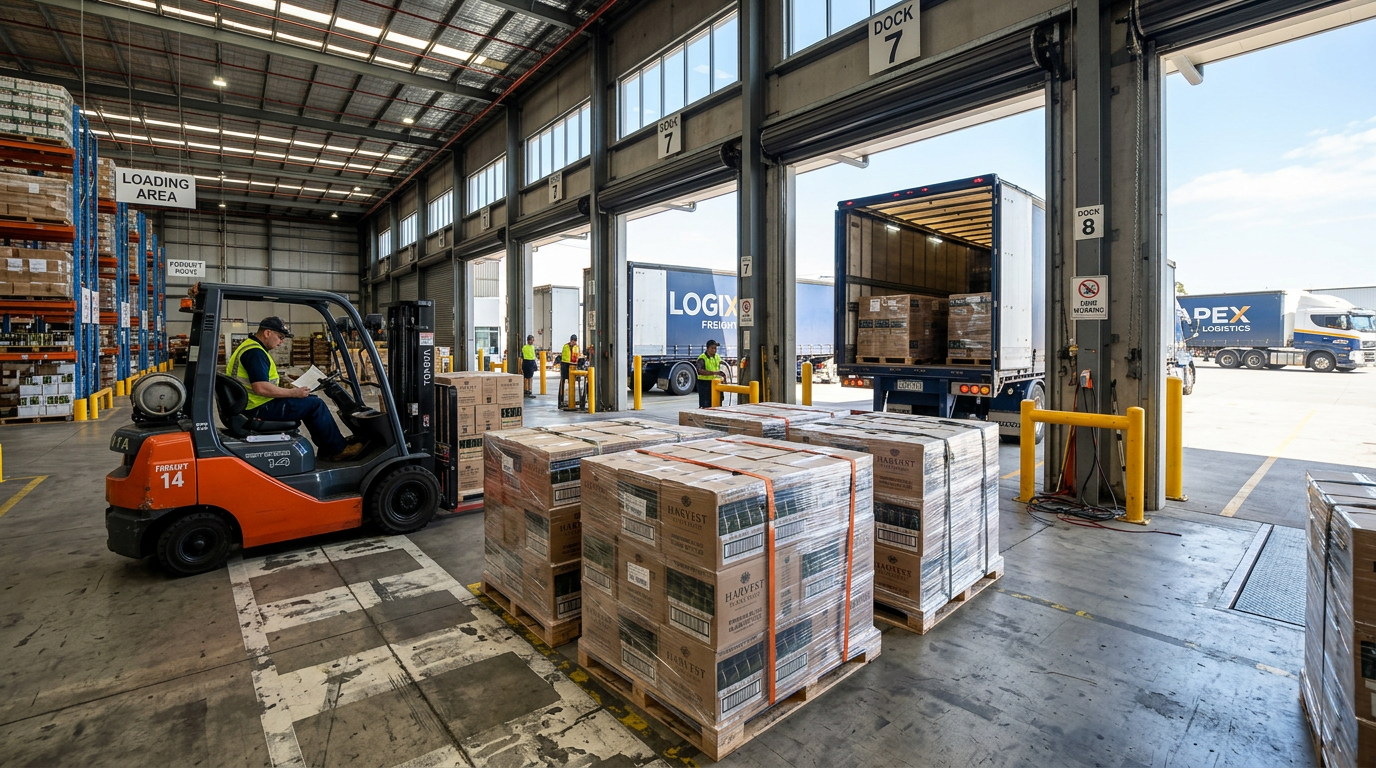
Breakage during ocean freight typically happens at three points: loading (forklift impact, drops), transit (vibration and container sway over 20-40 days), and unloading (rough handling at ports with less oversight). Vibration is the sneaky one — it doesn't cause dramatic breaks, it causes micro-fractures at the neck or base that show up as leaks weeks later on a retail shelf.
The Neck and Shoulder Are the Weak Points
If you're shaking out failure points, it's almost always the neck-to-shoulder transition or the base heel. These are the thinnest cross-sections on most bottle and jar designs, and they're exactly where dividers need to make firm, snug contact — not loose contact.
Choosing the Right Divider System for Your Bottle Shape
Not every divider works for every bottle. That's the mistake buyers make when they reuse the same carton spec across a whole product line. A tall, narrow perfume bottle needs a completely different divider geometry than a squat honey jar.
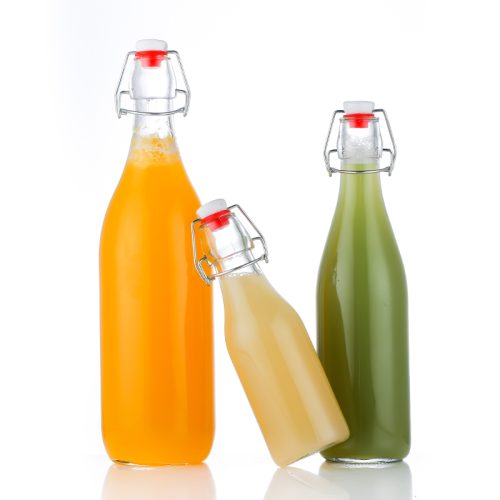
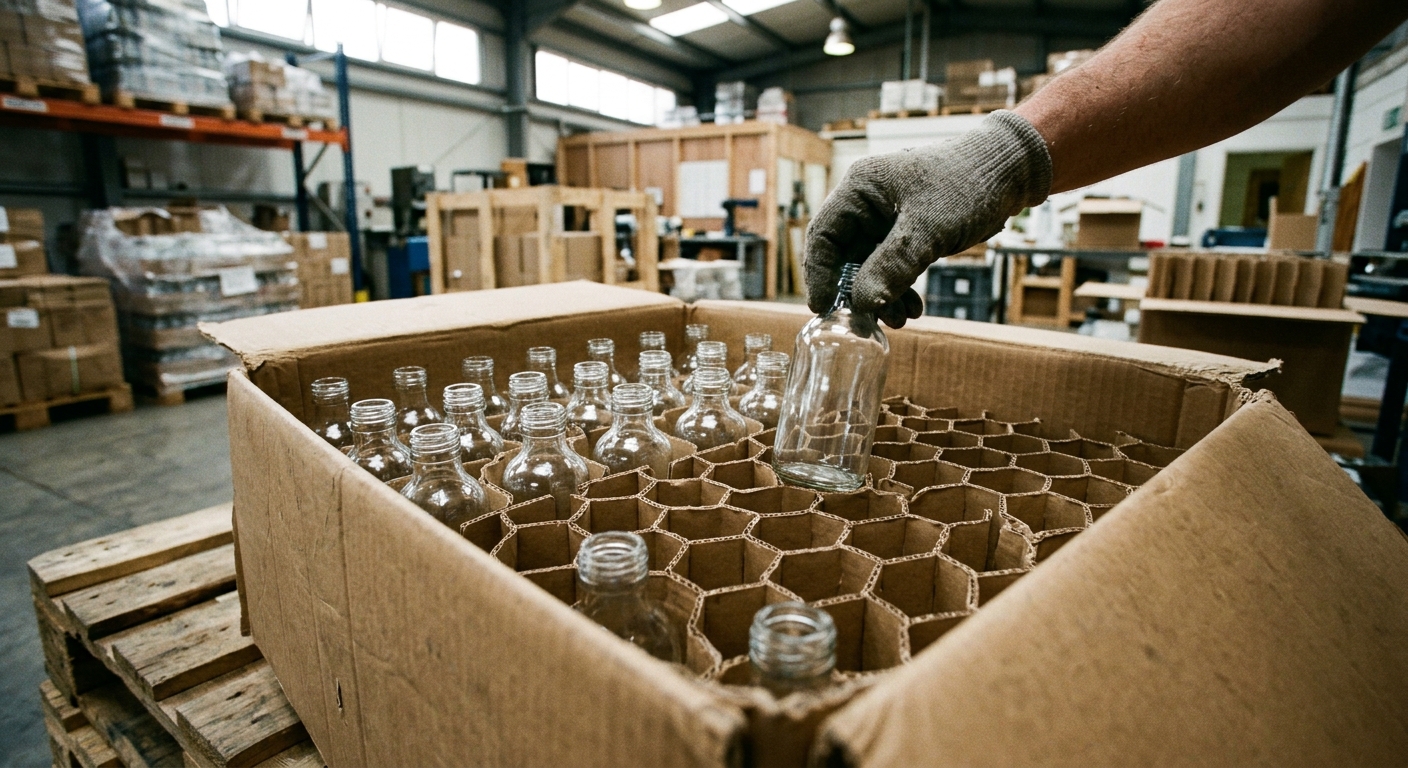
- Honeycomb kraft dividers — ideal for cylindrical bottles under 500ml, like those used for wholesale perfume bottles. They flex slightly on impact, absorbing shock rather than transferring it.
- Molded pulp trays — best when you're running one standardized shape at high volume, such as 500ml Boston round bottles. Cheaper per unit at scale, and fully recyclable, which matters for EU-bound shipments.
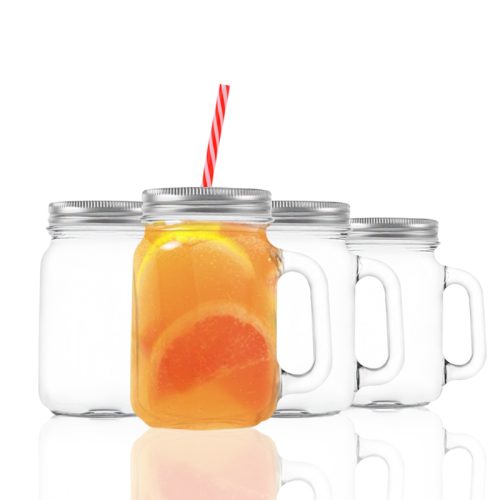
- Foam-lined bulk bins — used for irregular shapes like handled jars or embossed spirit bottles where a standard grid won't fit snugly.
A good rule: if you can shake a packed carton and hear glass moving, the divider is wrong. Zero rattle is the target, not “pretty snug.”
Carton Strength: The Number Buyers Forget to Ask About
Most buyers check bottle specs obsessively but never ask about the carton's burst strength or edge crush test (ECT) rating. That's backwards. A 32 ECT carton can handle roughly double the stacking pressure of a standard 23 ECT box — a difference that matters enormously when pallets sit five or six high in a container for a month.
What Rating to Actually Ask For
For international ocean freight, request double-wall corrugated cartons rated at minimum 200 lb burst strength (roughly 32 ECT). For air freight or shorter domestic runs, single-wall 175 lb (23 ECT) is usually fine and saves on freight weight.
One real scenario: a European olive oil importer switched from single-wall to double-wall cartons on a shipment of amber olive oil bottles after a 3% breakage rate on their first container. The carton upgrade alone — no divider change — dropped breakage to under 0.4% on the next shipment.
Palletizing: The Stacking Mistake That Ruins Whole Shipments
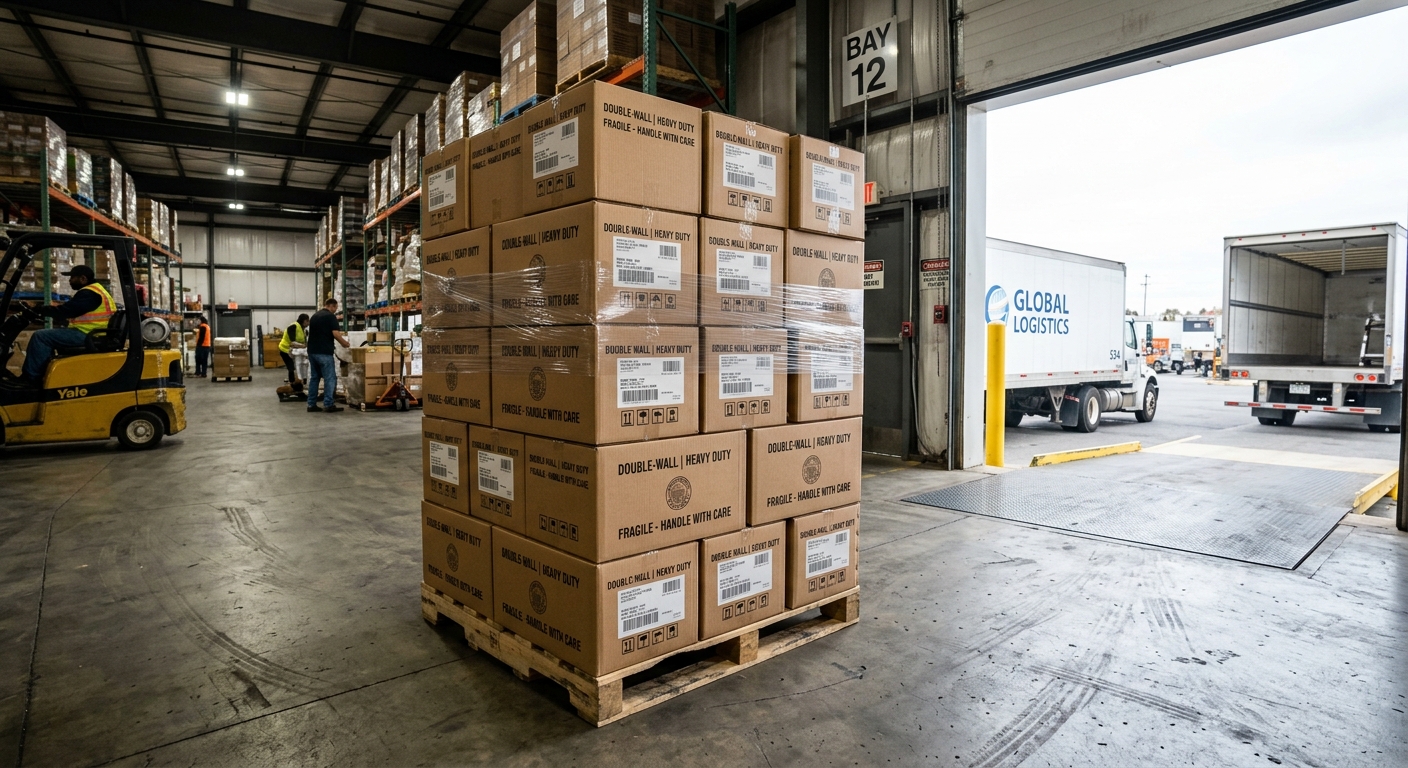
A single overloaded pallet layer can crush every carton below it. Compression testing exists for exactly this reason, and yet it's the step most wholesale buyers skip entirely, assuming the factory has already handled it.
Column Stacking vs. Interlocking
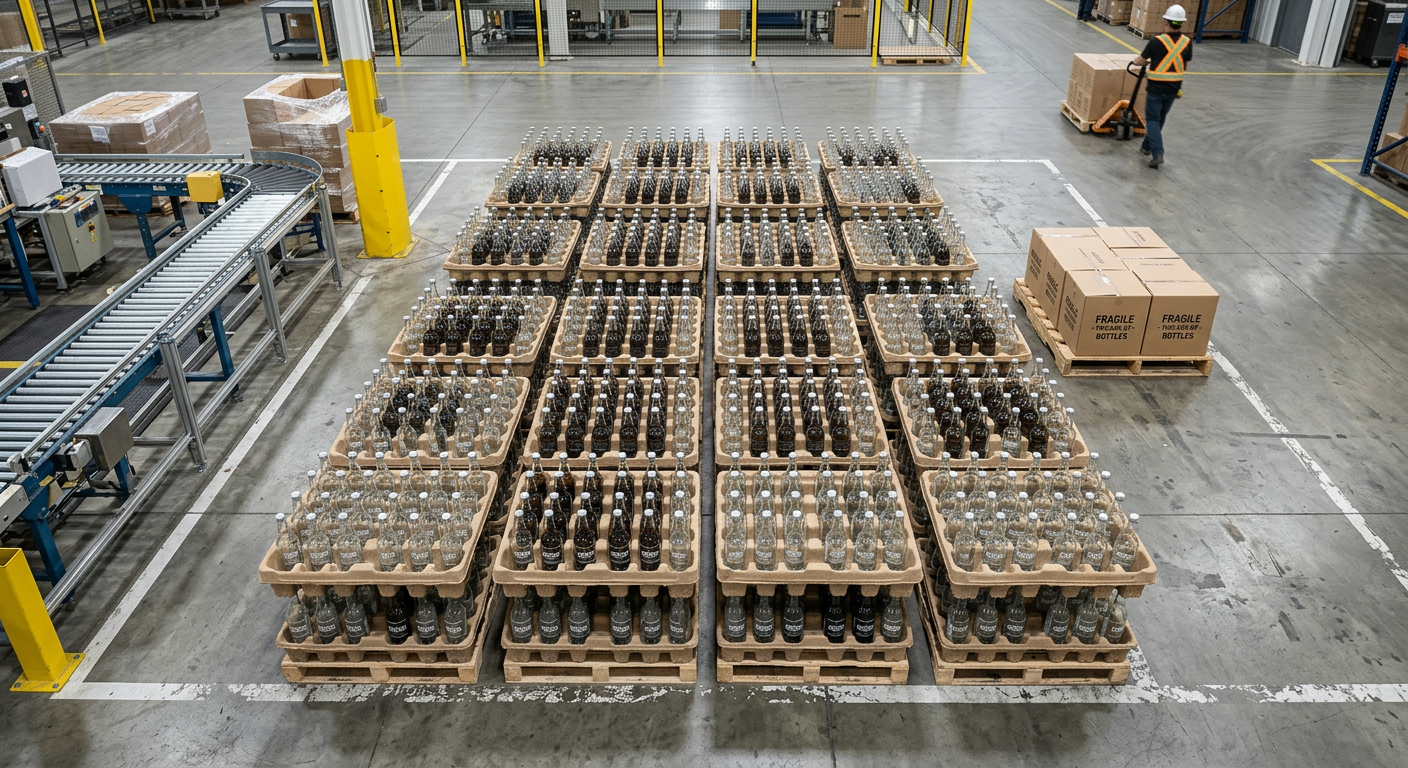
Column stacking — where cartons line up edge-to-edge in vertical columns — distributes weight straight down through the carton walls and is the stronger method for glass. Interlocking (bricklay) patterns look more stable visually but actually redistribute weight onto weaker carton points, which increases crush risk for anything containing glass.
Pallet height matters too. Most reputable exporters cap glass bottle pallets at 1.6-1.8 meters including the pallet base, and wrap with at least 3 rotations of stretch film at the top and bottom edges where shifting is most likely.
Vibration and Ocean Freight: The Silent Damage Source
Container ships vibrate constantly — engine harmonics, wave impact, rail transfers at ports. Over three to five weeks, that low-grade vibration is often worse than a single hard drop, because it fatigues glass at stress points repeatedly instead of once.
This is why bottle wall thickness and neck design matter more for long-haul export than for domestic trucking. Bottles designed with reinforced neck rings or thicker heel bases — common in custom glass alcohol bottles and spirit packaging — hold up better on 30+ day sea routes than lightweight designs optimized purely for cost.
If you're shipping to distributors overseas for the first time, it's worth requesting a vibration test report (ISTA 3A or similar) from your manufacturer before committing to a full container load.
Humidity and Temperature: The Overlooked Breakage Trigger
Glass doesn't react to humidity the way cardboard does — but your packaging does. Moisture absorption weakens corrugated fiber by up to 50% of its dry-state strength. A carton rated for 200 lb burst strength can drop well below 100 lb after sitting in a humid container for three weeks, which is exactly when pallet stacks start collapsing.
Silica gel packs and moisture-resistant carton coatings solve most of this. For shipments crossing tropical routes or long port dwell times, ask for wax-coated or water-resistant kraft cartons — the cost difference is marginal compared to a container of broken frosted wine bottles arriving as a write-off.
Compression Testing: The Step Most Buyers Skip
Ask your supplier for a compression test result before you approve mass production — not after the container has already sailed. A proper test simulates the stacked pallet weight a carton will bear for the full transit duration, not just a momentary squeeze.
What to Request
- Carton compression strength (CCS) test results at simulated humidity
- Drop test reports from at least 0.5m and 1m heights
- Vibration simulation test if shipping over 20+ days by sea
Manufacturers who run custom bottle development projects typically build these tests into the mold and packaging approval stage, which is far cheaper than discovering the problem after a claim.
A Real Example: Fixing a 4% Breakage Rate
A mid-sized distributor importing amber pharmaceutical bottles was seeing a 4% breakage rate on every container — enough to eat their margin on the whole order. The diagnosis: single-wall cartons, loose paper dividers, and bricklay pallet stacking at 2.1 meters.
The fix was straightforward: switch to molded pulp trays sized precisely to the bottle's shoulder width, upgrade to double-wall cartons, cap pallet height at 1.7m, and column-stack instead of bricklay. Next shipment: breakage dropped to 0.3%. Same bottles, same route, same carrier — just better engineering around the glass. This is the same logic applied to brown glass pill bottles and other pharmaceutical packaging where breakage isn't just a cost problem, it's a compliance one.